Can AI Really Predict the Stock Market?
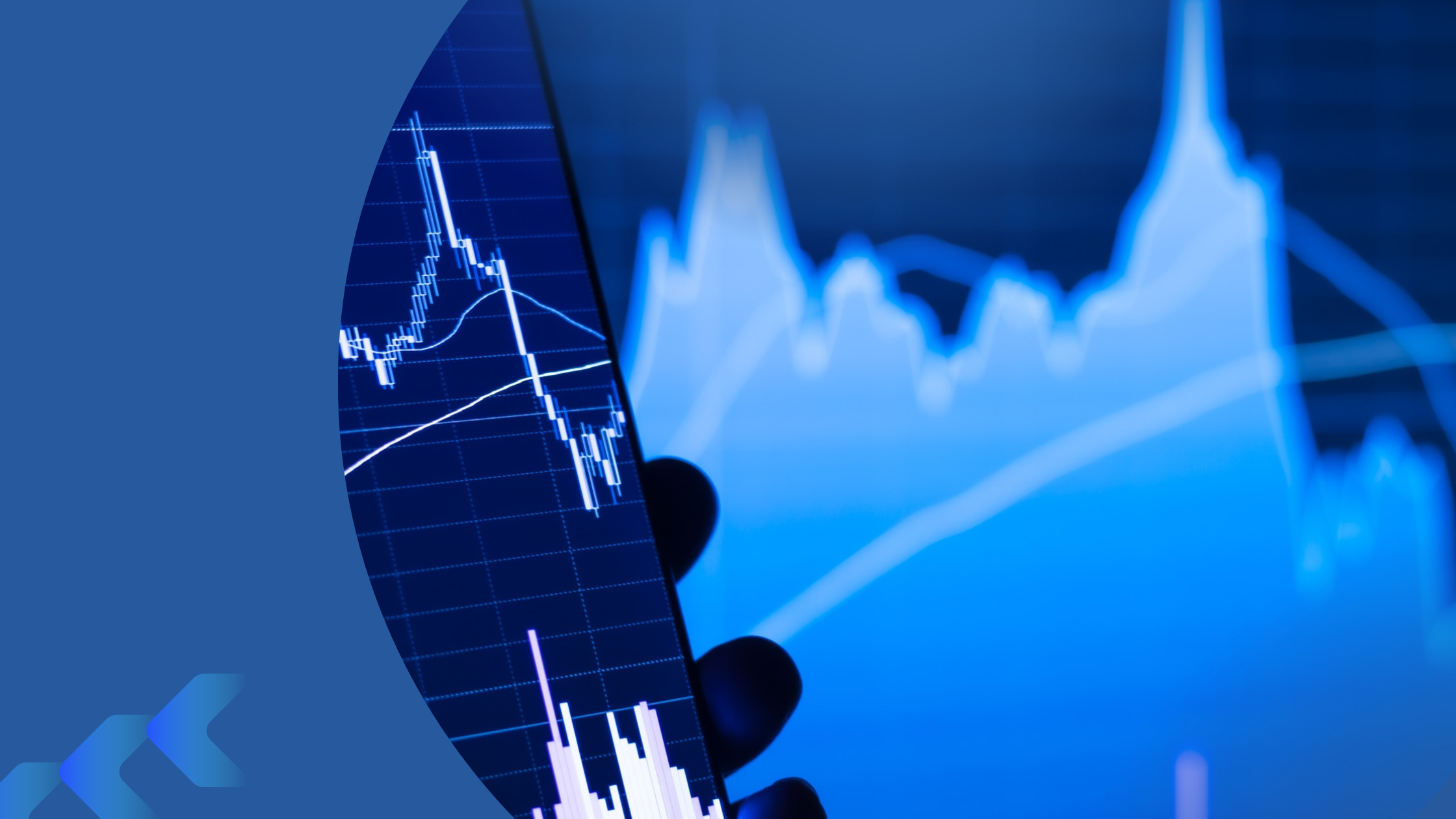
If you’ve ever watched Wall Street analysts throw their hands up in confusion after a volatile trading day, you’ve probably wondered if anyone—human or machine—can truly predict the stock market.
Now, with artificial intelligence (AI) dominating headlines and reshaping everything from how we shop to how we work, one question is louder than ever.
Can AI really predict the stock market?
The short answer? Kind of. The long answer? Let’s unpack it.
In this deep-dive article, we’ll explore the capabilities and limitations of AI stock market predictions, the AI investing future, and how AI trading algorithms are transforming how we trade. And yes, we’ll also examine whether you can trust a bot to beat Wall Street’s best.
The Stock Market – A Puzzle of Chaos and Patterns
Before we dive into AI, let’s talk about the stock market itself. The stock market isn’t just numbers going up and down. It’s influenced by:
- Human emotion and psychology
- Global economic data
- Political decisions
- Natural disasters
- Social media sentiment
- Earnings reports and more
In other words, it’s a chaotic mix of logic and unpredictability. That’s why even the smartest hedge fund managers don’t win every time.
But here’s where AI enters the chat.
How AI Stock Market Predictions Actually Work
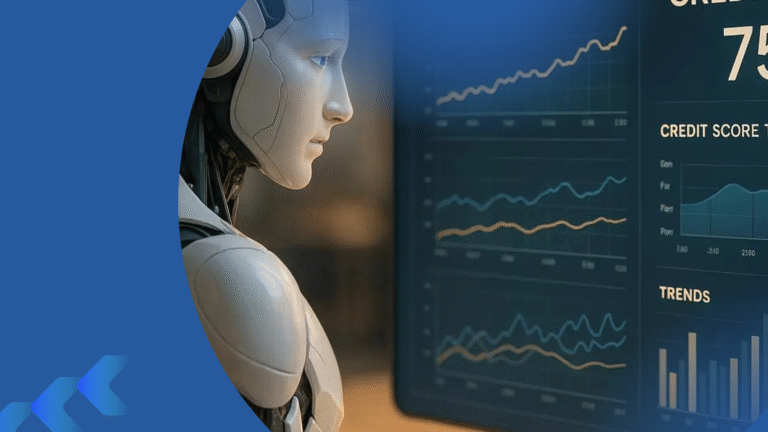
Artificial intelligence doesn’t have a crystal ball, but it does have computational power—a lot of it.
Using machine learning (ML), deep learning, and natural language processing (NLP), AI can process massive amounts of data faster than any human trader.
Here’s how AI typically attempts to predict the market:
1. Historical Data Analysis
AI can ingest decades of stock price data and identify patterns humans might miss. For instance, it can spot how certain sectors react to interest rate hikes or how stocks move after a CEO’s resignation.
2. Sentiment Analysis
Natural Language Processing enables AI to analyse social media chatter, financial news headlines, earnings calls, and even Reddit threads to gauge public sentiment.
Example: In 2021, sentiment analysis algorithms picked up on the GameStop frenzy way before it hit mainstream media.
3. Algorithmic Trading
These are automated systems powered by AI that buy or sell stocks based on predefined conditions. They react in microseconds—something no human can do.
Learn more about how algorithmic trading works here: Investopedia Guide to Algo Trading
Are AI Stock Predictions Accurate?
This is where it gets tricky. AI can recognise patterns, but it can’t predict black swan events (like a global pandemic or a sudden war).
Moreover, stock prices are also driven by irrational human behaviour, which even the best models struggle to forecast.
So while AI can give you probabilities, not certainties, it still holds real value.
In fact, many hedge funds and financial institutions already use AI-powered predictions. Firms like Renaissance Technologies and Two Sigma have built their reputations (and multi-billion-dollar portfolios) on AI-driven strategies.
The AI Investing Future: Is This Where We’re Headed?
AI isn’t just changing the way we invest—it’s changing who can invest.
With the rise of AI-powered investing apps, the barrier to entry is lower than ever.
Examples of AI Investing Platforms
- Wealthfront – Uses AI to automate portfolio rebalancing and tax-loss harvesting
Visit Wealthfront - Q.ai (by Forbes) – AI-powered investment kits tailored to market trends
Try Q.ai here - Numerai – A hedge fund built entirely on crowdsourced AI predictions
Explore Numerai
These platforms show us that the AI investing future is already here—and it’s becoming more democratised by the day.
What is an AI trading algorithm?
AI trading algorithms are at the heart of this transformation. Let’s demystify them.
What Are They?
They are mathematical models that tell computers when to buy or sell stocks based on certain signals. These signals can include:
- Price movement
- Volume changes
- Technical indicators (like RSI, MACD)
- News sentiment
- Social media trends
Some trading bots even use reinforcement learning—they learn from their own trades, improving over time.
Who Uses Them?
- Institutional investors (hedge funds, asset managers)
- Retail investors using platforms like Tradetron or Kavout
- Crypto traders on platforms like 3Commas and Pionex
The Pros and Cons of AI in Stock Market Predictions
Pros:
✅ Speed and Scalability
AI can process thousands of data points in seconds
✅ No Emotional Trading
Unlike humans, AI doesn’t panic-sell
✅ 24/7 Market Monitoring
AI never sleeps—it monitors the market round the clock
✅ Customization
Traders can customize AI strategies based on their risk profile
Cons:
❌ Black Box Problem
Many AI systems don’t explain how they arrive at conclusions
❌ Overfitting
AI models may perform well on historical data but fail in real-world scenarios
❌ Vulnerable to Manipulation
Fake news, social media bots, and market manipulation can fool AI systems
❌ Dependence on Quality Data
Garbage in, garbage out. If AI is fed inaccurate data, it will fail
Will AI Replace Human Traders?
It’s a question that keeps popping up, especially in fintech circles. The truth is, AI is a complement, not a replacement.
While AI trading algorithms can process data and execute trades faster, they lack strategic thinking, intuition, and real-world context.
For example, a human trader might decide not to trade on a certain day due to geopolitical instability or rumours. AI, unless programmed to do so, will continue its operations.
That said, hybrid models—where humans oversee AI-powered systems—are proving to be the most successful.
Real-World Case Studies of AI in Trading
i. Bridgewater Associates
Ray Dalio’s hedge fund uses machine learning to enhance macroeconomic predictions. Their AI system models global economic dynamics using terabytes of data.
ii. Sentient Technologies
They used deep learning to evolve trading strategies without human input. The AI ran simulations of millions of possible trades before settling on the best-performing ones.
iii. Bloomberg Terminal
Even Bloomberg now incorporates AI-driven sentiment analysis to help analysts interpret financial news faster and more accurately.
Should You Use AI to Trade Stocks?
The answer depends on your goals and risk tolerance. If you’re a long-term investor, AI can help you with portfolio rebalancing, risk management, and diversification.
If you’re a day trader, AI trading algorithms can give you an edge—if you know what you’re doing. They can help automate entry and exit points, stop losses, and trailing strategies.
AI is a tool, not a magic wand. Use it wisely, and never invest more than you can afford to lose.
Conclusion
AI can’t predict the stock market with 100% accuracy—but it’s getting better at identifying high-probability opportunities, minimising risks, and automating decision-making.
In other words, AI won’t make you a millionaire overnight, but it can definitely make you a smarter, more efficient investor.
As we move deeper into the AI investing future, expect to see more integration of AI in finance—from robo-advisors to quantum trading systems.
But always pair AI with human insight, emotional intelligence, and critical thinking. That’s the winning combo.